The Evolution of women in sports and the path forward
Global Sports28 August 20255 min read
Summary mode
Women’s participation in sports has a long history dating back to ancient Greece, however, the journey has been persistently marked by formidable challenges. Throughout history, female athletes have grappled with disparities in popularity when compared to their male counterparts. They have endured unequal funding, as well as open discrimination and even sexism. Furthermore, women have been glaringly underrepresented in pivotal sport institutions, decision-making bodies, and leadership positions in sports.
The unenviable position of women in sports has come into focus on several occasions in recent times. A particularly notable incident unfolded at the Women’s World Cup in Australia, where the president of the winning country’s football team, Spain, congratulated one of the national team’s goal scorers with an unsolicited kiss on the lips. The public criticised the act as wholly inappropriate, with many voices more harshly calling it a grievous violation akin to sexual assault. The incident catalysed a broader discussion on the subordinated position of women in sports and the egregious treatment of female athletes by individuals occupying positions of power within sport clubs and associations, predominantly held by men. Given that football stands as one of the sports predominantly governed by men, the resounding support the player in question received from both male and female colleagues and the broader public marked a significant stride toward acknowledging the challenges faced by female sports and improving the status of women in sports on an international scale.
Despite numerous advancements and incremental progress that has occurred since, women’s participation in sports continues to encounter daunting obstacles, including unequal media coverage, disparities in funding, and lower remuneration in comparison to male athletes. A concomitant issue lies in the underrepresentation of women in sport organizations, where women are markedly less involved in operational and executive roles.
Experts attribute these challenges to the unequal support for girls’ and boys’ participation in sports from a young age. Research reveals that girls between the ages of 6 and 9 exhibit equal interest in sports as boys. However, by age 14, girls drop out of sports at a rate six times higher than boys. Researchers contend that this alarming trend stems from the differential reinforcement girls and women receive regarding their participation in sports. Conversely, other studies underscore the profoundly positive effects of practicing sports on girls, enhancing their confidence, self-esteem, and critical skill development. Therefore, support for young female athletes proves as important for their development, just as it is for boys.
The Path of Change
Cultural transformation at the local and global levels is imperative and must emanate from every sphere of influence.
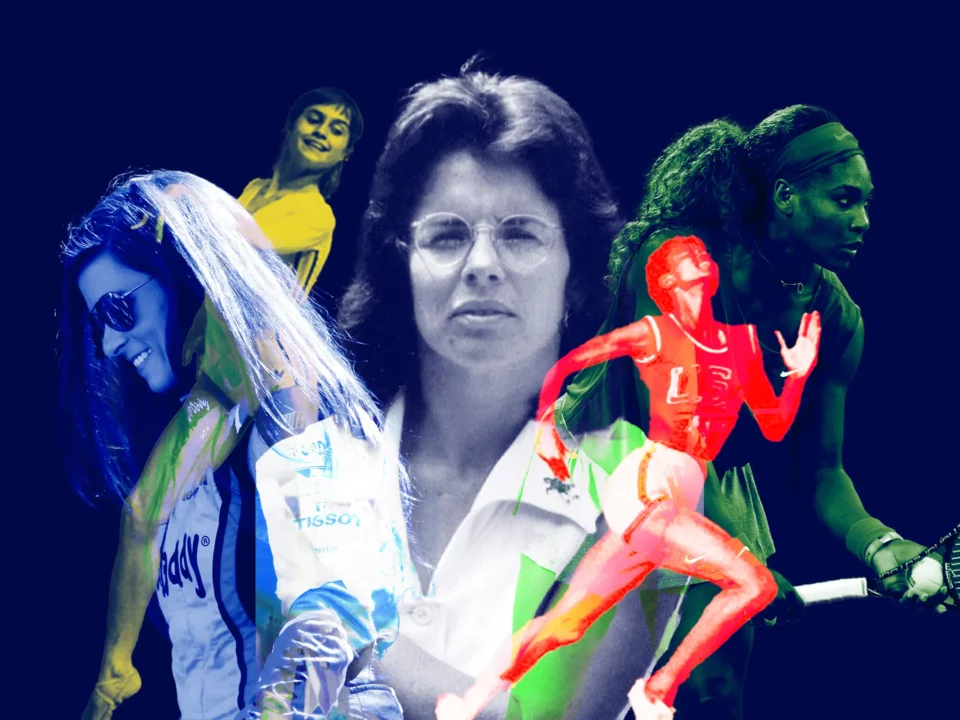
The emergence of female role models and inspiring athletes in the past decades has additionally bolstered the realm of women’s sports. Affecting not only the popularity of female sports, but also addressing issues like gender, racial, social discrimination and participating in humanitarian causes, figures like Wilma Rudolph, Billie Jean King, Serena and Venus Williams, Nadia Comaneci, Danica Patrick, and many others, have garnered global acclaim and significantly elevated the status of women in sports. Digital platforms and social media have furnished female athletes with the means to connect with fans and champion their respective sports, thereby amplifying the visibility of women’s sports.
Prominent women in high-ranking sports management positions have also successfully challenged stereotypes, including names like Michele Roberts, Jeanie Buss, Kim Davis, Nicole Lynn, Kim Ng, and numerous others who have been widely recognized for their leadership and advocacy for gender equality and women’s rights in sports.
The Role of International Sport Institutions
At the level of institutions, efforts have been directed towards eradicating gender disparities in sports. In 2014, the International Olympic Committee (IOC) introduced Agenda 2020, which encompasses several key objectives that aim to bolster women’s involvement in sports at all levels. They include promoting the presence of women in leadership roles within the Olympic Movement and the National Olympic Committees, as well as among athletes, coaches, officials, and administrators. The IOC has also instituted the Gender Equality Review Project to scrutinise and gauge progress in gender equality within the Olympic Movement and its affiliated sports organisations .
In September 2019, the European Commission established the High-Level Group on Gender Equality in Sport, a pivotal initiative which provides recommendations and guidance on the path toward gender equality in sports across the European Union. Furthermore, initiatives like “SheIS” and “See Her” have been set up to enhance the visibility of women’s sports and challenge entrenched gender stereotypes in advertising and media.
The Role of Academic Sport Institutions
Championing gender equity in sports and sport management is of paramount importance for creating an inclusive and empowering environment, affording all individuals the opportunity to pursue their sporting aspirations crucial for their wellbeing.
AISTS, through its unwavering commitment to high-quality education, offers a special category of scholarships for aspiring female sport professionals. This is a proof of our dedication to supporting female participation in sports and enhancing their representation in decision-making processes, thereby guiding the sport industry towards greater inclusivity and equity among all genders.
This article was originally published by AISTS (International Academy of Sport Science and Technology) and can be viewed here and be sure to check out their program of the MAS in Sport Management and Technology.
Share this article
Published with
International Academy of Sports Science and Technology (AISTS)
The AISTS responds to the needs of the sport industry by providing education in the form of short courses and a world-leading Sport Management Master program, alongside consulting and research to the international sports industry. The AISTS MAS - Master of Advanced Studies in Sp…
Javier Olmo, Aston Villa Strength & Conditioning Coach and UCAM alumnus, discusses the evolution of strength and conditioning in professional football, the use of data, injury prevention and the role of trust in athlete performance In an interview with UCAM Spanish Sports University, Aston Villa Strength & Conditioning Coach and former student of the UCAM
From work experience to the boardroom, Sarah Guilfoyle became English football’s youngest CEO at just 27. Discover her journey, lessons in leadership and resilience, and advice for building your own career in sport.
International Women’s Day is an opportunity to recognise the individuals helping shape the future of the sports industry and to celebrate the impact women continue to make across the global game. Across all of sport on and off the field of play, women play a vital and ever central role in shaping sport. Today the